The Subtle Art of Knowing When to Upgrade Your Kitchen Appliances
Posted by Georgia Sundare on October 1, 2026
There is a specific, quiet moment every homeowner experiences before they admit an appliance is on its last leg.
Maybe it is the quiet rumble of a ten-year-old refrigerator coming back to life at 2:00 AM, vibrating through the kitchen floorboards. Maybe it is the burner on the left side of your stove that requires three precise flicks of the lighter because the igniter gave up last winter. Or maybe you have just renovated your quartz countertops, only to realize your scratched, yellowing dishwasher looks completely out of place against the new stone.
We live with aging kitchen appliances long past their expiration dates because, on paper, they technically still function. The fridge still chills drinks, even if the crisper drawer is permanently cracked. The oven still bakes, even if you have to rotate the casserole dish halfway through to avoid burning one side.
However, there is a clear distinction between an appliance that merely functions and one that actually elevates your daily routine. Knowing when to make the leap from patching up old equipment to investing in modern, pro-style equipment comes down to understanding value, efficiency, and how you actually use your kitchen.
1. The Hidden Costs of Patching Up the Old
The most common reason people delay a kitchen upgrade is simple logic: if it isn't completely broken, why spend the money? But running aging equipment often costs more over time than replacing it outright.
First, consider energy efficiency. Household appliances built ten or fifteen years ago were engineered under entirely different energy standards. A refrigerator manufactured in the late 2000s, for instance, runs its compressor almost constantly to maintain uniform temperatures as insulation degrades. Over twelve months, that single unit can draw a surprising chunk of your annual power bill. Modern units use inverter compressors and multi-zone cooling loops that draw a fraction of that electricity while maintaining far more consistent internal temperatures.
Second, consider the endless repair loop. The moment you pay for a second major service call on a unit, whether it is replacing an oven element or fixing a leaking pump in a dishwasher, you are essentially throwing good money after bad. A solid rule of thumb among builders and designers is simple: if a repair costs more than fifty percent of what a new unit would cost, it is time to retire the machine.
2. Aesthetics and the Shift Toward Integrated Design
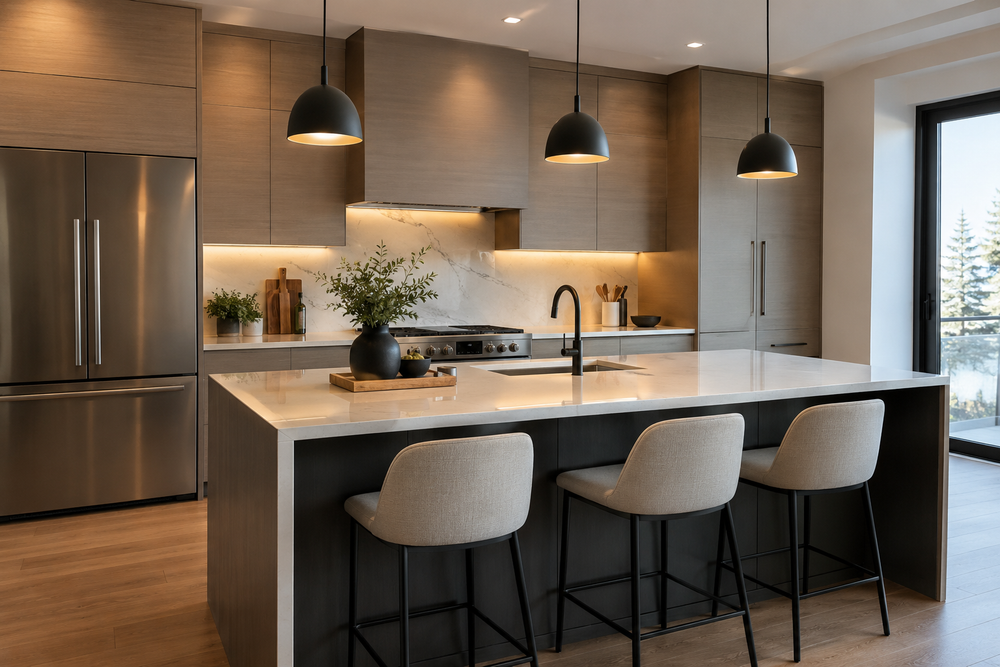
Kitchen design has evolved dramatically over the last decade. The era of bulky, oversized stainless steel boxes taking over small spaces is officially behind us. Today's top kitchen designs emphasize clean lines, architectural flush mounting, and materials that feel intentional rather than industrial.
If you walk into a newly built or renovated high-end home today, you will notice a few distinct trends that older appliances simply cannot match:
-
Counter-Depth Profiles: Traditional fridges stick out several inches past standard 24-inch kitchen cabinets, creating awkward bottlenecks in traffic flow. Modern counter-depth French door and side-by-side models sit almost flush with your surrounding woodwork, opening up floor space and giving the kitchen a built-in look.
-
Specialized Finishes: Standard bright stainless steel is no longer the only option. Soft matte black, satin stainless steel finishes that resist fingerprints, and integrated panel-ready designs allow appliances to seamlessly complement warm woods, bold paint colours, and natural stone slabs.
-
Pro-Style Statement Pieces: Ranges and cooktops are no longer hidden away. Heavy-duty cast-iron grates, solid metal control knobs, and high-BTU brass burners turn the stove into the centrepiece of the room rather than an afterthought.
Upgrading your appliances is not just about utility; it is one of the few home improvements that instantly updates the visual weight and market value of your entire living space.
3. What Modern Performance Actually Feels Like
If you have not shopped for kitchen gear in five to ten years, the performance gap between legacy models and modern equipment can be shocking.
Take cooking, for example. Traditional consumer ranges often struggle with heat distribution, leading to hot spots and slow boiling times. Modern pro-style gas and dual-fuel ranges are designed with precision control in mind, giving you ultra-low simmer settings for delicate sauces alongside high-powered ring burners built to bring massive pots of water to a boil in minutes. True convection ovens use dedicated heating elements paired with targeted fan systems to circulate hot air evenly, meaning four trays of cookies bake at the exact same rate regardless of which rack they sit on.
In the cleaning department, modern dishwashers have replaced loud, clunky spray arms with whisper-quiet, multi-level filtration systems. You no longer need to spend twenty minutes pre-rinsing dishes before loading them; modern soil sensors detect how dirty the water is and automatically adjust cycle times and water pressure accordingly.
4. The Smart Way to Upgrade: Bundles over Piecemeal
When you decide it is time for a refresh, one of the biggest mistakes you can make is replacing appliances one by one over several years.
Buying a range from one manufacturer this year, a refrigerator from another next year, and a dishwasher two years down the line usually leads to a mismatched kitchen. Stainless steel finishes rarely match perfectly across different brands. Some carry cool, blue undertones while others carry warmer, brushed tones. Handle styles, corner bevels, and digital display colours will also clash.
Opting for complete, curated appliance packages eliminates the guesswork. Manufacturers design their product lines to work together aesthetically and dimensionally. Beyond the visual benefit, purchasing kitchen packages unlocks significant bundle pricing and rebate opportunities that you will not get when buying single pieces.
Making the Decision
A kitchen is not just a place where meals are prepped; it is the natural gathering spot of every home. Cooking on equipment that heats evenly, keeping food fresh in a well-lit, organized refrigerator, and running a dishwasher you can barely hear while sitting in the living room changes the entire atmosphere of your house.
If you find yourself constantly adjusting temperatures, wiping down smudged stainless steel, or praying your stove makes it through holiday dinner prep, it might be time to stop managing old equipment and start exploring what a modern upgrade can do for your home.